Spot Park Challenge
Reviews
Spot Park Challenge is a browser-based driving puzzle built around one clear task: park without touching anything. Its strength lies in the way small layout changes create genuinely different problems, from parallel parking to backing into tight gaps. The lack of installation and simple controls make it accessible, though players seeking fast action or realistic driving physics will find it slow. Best suited to those who enjoy spatial reasoning and methodical trial and error.
Description
Precision Parking as a Puzzle
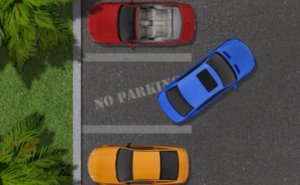
Spot Park Challenge turns parking into a test of spatial judgment. The objective never changes: move the car into the designated parking area without contacting any surrounding object. What shifts is the arrangement of walls, other vehicles, and boundary markers. Because contact ends the attempt, every input carries weight. A slight misjudgment of distance or angle can turn a near-success into a restart, which pushes players to think before they press a key.
Controls and Vehicle Response
Players direct the car with arrow keys or on-screen controls. The vehicle moves forward and backward and turns left or right. There is no acceleration curve to manage, so the difficulty comes entirely from positioning. Gentle adjustments tend to work better than sharp corrections; oversteering often sends the car into an obstacle. Learning how the car responds to short taps versus held inputs is part of the early learning curve.
Level Layouts and Escalating Difficulty
Stages vary in structure. Some require parallel parking between two objects, others involve backing into a spot, and some ask players to navigate around a series of barriers. As players progress, parking spaces become tighter and obstacle arrangements more intricate. This progression demands more planning per move rather than faster reflexes, which keeps the puzzle focus intact.
Platform and Session Length
The game runs directly in a web browser on desktop and mobile devices. No installation or download is needed, and the interface stays simple so attention remains on the puzzle. That design makes it easy to attempt a few stages during a short break, though later layouts can take several tries to clear.






Editorial Notes