Sky Escape

Arcade Action Casual Reflex One-Tap High Score Endless
Sky Escape
73
Developer: Disk Shift Digital
Published: 1736611200
Updated: 2026-10-01

Reviews

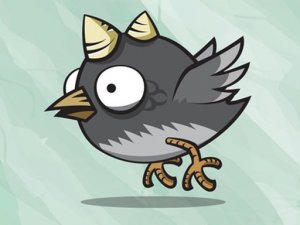
Sky Escape keeps its scope tight: one bird, one input, and an endless stream of moving walls. The gradual speed increase gives the game a natural difficulty curve, and the instant restart makes failed runs feel like a prompt to try again rather than a punishment. It is a good fit for players who enjoy reflex-based arcade games and do not need progression systems or story content. The main limitation is variety, since the core loop does not change beyond getting faster.

Description

Core Flying Mechanic

Sky Escape is built around a single input: tap or click to make the bird rise, release to let it fall. That one-button control scheme is the entire interface. There are no power-ups, no alternate routes, and no complex menus to learn. The bird moves forward automatically, and your only job is to manage its altitude.

Wall Patterns and Timing

Walls approach from both sides with gaps that the bird must pass through. Touching any wall ends the run immediately. The gaps are not randomly scattered; they follow a rhythm that becomes readable after a few attempts. Early walls arrive slowly with generous openings, but the game steadily increases their speed. The challenge is not memorizing a fixed layout but adjusting your tap rhythm to match the current pace.

Scoring and Replay Loop

Every moment the bird stays alive adds to your score. There is no level select or story mode. The structure is a straightforward high-score chase: play, crash, restart, and try to push your personal best a little further. Because runs are short and restarts are instant, the game fits naturally into brief sessions.

Difficulty Curve and Accessibility

The difficulty rises purely through speed. Faster walls mean less time to react and smaller margins for error. That design keeps the game accessible to newcomers while giving experienced players a reason to keep practicing. The absence of violent or inappropriate content makes it suitable for all ages, and the one-tap control works equally well on desktop and mobile browsers.

Editorial Notes

Compatibility

▸ Desktop: Chrome / Edge / Firefox / Safari
▸ Mobile: iOS Safari / Android Chrome
▸ Tablet: iPadOS Safari / Android Tablet Browser
Keep your browser updated for the best experience

Faq

Does Sky Escape have an ending or final level?
No. Sky Escape is an endless arcade game. The walls keep coming and the speed keeps increasing until the bird touches a wall. Your run ends only when you crash, so the goal is always to extend your current score rather than reach a final stage.
Can I play Sky Escape on a phone or tablet?
Yes. The controls are tap or click, which means the game works with touchscreens and mouse input alike. There are no keyboard combinations or multi-button commands to learn, so the same simple interaction carries across devices.
Is there a way to slow down the walls in Sky Escape?
No. The speed increase is a fixed part of the game's difficulty curve. You cannot pause the acceleration or reduce it through settings. The only way to handle faster walls is to improve your tap timing and stay calm as the pace rises.
What happens to my score if I close the browser?
Sky Escape tracks your score during a session so you can compare attempts and aim for a higher personal best. The game does not describe cloud saves or persistent accounts, so closing the browser may reset your progress. Treat each session as a fresh start.
Is Sky Escape suitable for young children?
The game contains no violent or inappropriate content and uses a single tap control, which makes it approachable for younger players. The main challenge is reaction speed, so very young children may find the faster wall speeds frustrating, but there is nothing in the content itself to restrict.
How do I improve my timing in Sky Escape?
Focus on small, steady taps instead of large corrections. Watch the gap between walls rather than the bird itself, and try to establish a consistent rhythm. As speed increases, anticipate the next opening rather than reacting after the wall is already close.