Doodle Path Physics Puzzle
Reviews
Doodle Path Physics Puzzle focuses on a single, clear idea: draw a line and let physics do the rest. The gradual introduction of walls, gaps, and springs keeps the challenge moving without overwhelming the player. It suits anyone who enjoys thoughtful, low-pressure puzzles and creative problem solving. The main limitation is that the game leans on one mechanic throughout, so players seeking variety may find it repetitive over time.
Description
Drawing the Route
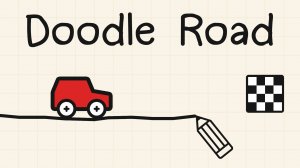
In Doodle Path Physics Puzzle, the core action is drawing a line from the car to the target. Once you release, the car drives along the path you created. The line becomes a physical track, so its shape directly controls the car's movement. Early levels keep the route simple, but walls soon block the direct way. Because the car cannot fly, you must draw the path underneath or around obstacles. This turns each level into a small engineering problem where the solution is literally in your hands.
Physics That Shape Your Solution
Momentum and gravity are not background details; they determine whether your path works. Later levels may require you to start the line behind the car to give it a running start. Hills become tools for building speed, especially when the engine shuts off mid-route. Springs can launch the car toward the target, but the angle and timing of your drawn line affect the result. You are not just connecting two points; you are shaping how the car accelerates, climbs, and falls.
Progression and Obstacle Variety
Each level introduces a new arrangement of walls, gaps, and springs. Difficulty rises gradually, so the game stays accessible while still asking for strategic thinking. You will often need to observe the layout before drawing, then adjust the slope or starting point after a failed attempt. The puzzles reward careful planning over quick reflexes, and experimentation is part of the process. Because the controls are simple, players of all ages can pick up the game, but the later puzzles demand a solid feel for how the car behaves.
Approach and Mindset
Success comes from treating each level as a physics question. Practicing different slopes and angles helps you predict how the car will move. Testing starting points teaches you how much momentum you need for a gap or hill. Learning how springs affect the car's trajectory lets you use them deliberately rather than by accident. Taking a moment to study the level before drawing saves time. The game is relaxing in tone but mentally stimulating, making it a good fit for players who enjoy creative problem solving without pressure.









Editorial Notes