Draw Path Master Puzzle

Reviews
Draw Path Master Puzzle focuses on drawing paths for a moving object in 3D space, using bounces and angles to hit targets. Its limited-attempt system encourages planning over trial and error, and the 3D perspective adds depth to solutions. Beginners can start easily, while later levels introduce new obstacles. The main limitation is that the input does not specify level count, multiplayer, or advanced features, so players seeking those should check the game directly.
Description
Core Physics Puzzle
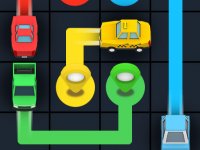
Draw Path Master Puzzle is a 3D physics-based puzzle game. Each level asks you to complete a mission by drawing a path for a moving object. The object follows your drawn track, bouncing off walls and other surfaces until it reaches its destination. [IMG_1] The challenge comes from planning a route that avoids obstacles while protecting harmless elements in the scene.
Drawing and Guiding the Object
You draw a line on the screen using a finger or mouse. That line becomes the track the object travels along, and ricochets off the 3D environment are part of the solution rather than a failure. Because each level has a limited number of attempts, the first draw matters. You need to read the layout, estimate angles, and decide where a bounce will send the object before committing to a path.
Level Variety and Difficulty
New obstacles and layouts appear as you progress, so solutions that worked earlier may not transfer directly. The 3D perspective adds depth, letting you use walls and surfaces that a flat view would hide. The game is designed to be accessible to beginners while still offering a satisfying challenge for experienced puzzle players, with family-friendly content throughout.
Approach and Experimentation
Careful planning usually beats speed. Analyzing the level before drawing, checking obstacle positions, and using the environment to bounce the object toward hidden targets are the main habits that lead to success. Practice helps you internalize how the physics behaves, and each attempt teaches you something about the layout.







Editorial Notes