Whimsical Football Clash
Reviews
Whimsical Football Clash delivers exactly what its name suggests: lighthearted soccer with simple controls and short matches. The adaptive AI keeps solo play engaging, while local two-player mode adds social value without requiring an internet connection. The cartoon art style and straightforward mechanics make it accessible to younger players and casual fans. The main limitation is depth—there is no online multiplayer or complex progression. It works best as a quick, pick-up-and-play diversion rather than a long-term competitive game.
Description
Simple Controls, Immediate Play
Whimsical Football Clash uses keyboard keys or touch inputs for movement and kicking. There is no complex button combination to memorize. The objective is classic: score more goals than your opponent before the time limit runs out. Because matches are short, the game fits into a break or a few spare minutes. The control scheme works the same on desktop and mobile, so switching devices does not change how you play.
Single-Player and Local Two-Player
Two modes are available. In single-player, you face an AI opponent that adjusts to your skill level, which keeps matches competitive whether you are new or experienced. In two-player mode, you and a friend play on the same device. This local setup requires no internet connection and encourages social play. The AI adaptation means solo sessions remain useful for practicing timing and positioning without becoming either too easy or too punishing.
Visual Style and Atmosphere
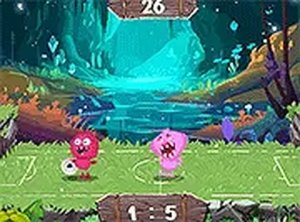
The art direction favors exaggerated, friendly character designs and a field filled with vivid colors. The overall look feels more like a playground than a competitive stadium. That choice lowers the pressure for younger players or anyone seeking a relaxed session. Full-screen mode is available and adds immersion without introducing new mechanics or menus.
Skill and Strategy
Simple controls do not mean shallow play. Success depends on reading the ball's trajectory and positioning your character before the kick. Against the AI, watching its movement patterns can reveal scoring chances. In two-player matches, passing and spatial coordination create openings that solo play does not. Regular sessions build ball control and faster decisions under time pressure.









Editorial Notes