Animated Character Summer Games
Reviews
Animated Character Summer Games delivers exactly what its name suggests: a set of timing-based athletic events starring cartoon characters. The strength is accessibility—rapid tapping for sprints and swims, precise taps for jumps and lifts, and no reading required. Local multiplayer adds friendly turn-based competition. The limitation is depth; events rely on a single input type, so players seeking complex mechanics may find it thin. Still, for kids and casual groups, it works.
Description
Event Lineup and Core Mechanics
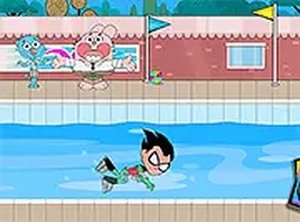
Animated Character Summer Games bundles several track-and-field style events into one browser experience. The roster includes sprint races, swimming heats, long jump, high jump, weight lifting, and a pong jump activity. Each event runs on timing-based inputs rather than complex button combinations. Sprint and swim events reward rapid tapping to build speed, while jump events require a well-timed tap to launch at the right moment. Weight lifting and pong jump also hinge on precision timing. The scoring system tracks personal bests, so repeated attempts have a clear purpose: beat your own record.
Character Selection and Visual Style
Before any event, players pick from a roster of animated heroes. Each character keeps a distinct look, with bright colors and expressive animations that fit the lighthearted tone. Backgrounds shift per event, moving from poolside scenes to grassy fields, and the art direction keeps the action readable even during fast sequences. That clarity matters because players need to track their character while reacting to timing cues.
Competition Structure and Replay Value
The game supports both solo play and local multiplayer sessions. In single-player, the focus is on beating your own records across all events. With others, participants take turns selecting characters and events, and the highest combined score wins. This turn-based format keeps competition friendly rather than confrontational. Because players may favor different activities, no two sessions play out the same way.
Control Design and Accessibility
Input methods are intentionally simple: taps or clicks at the right moments. Running and swimming events use rapid tapping to increase speed, while jumping events demand precise timing to launch at the optimal point. The interface provides clear visual cues such as countdown timers and progress bars, so players always know their status. No reading is required to play, which makes it suitable for pre-literate children.
Technical Performance and Platform Support
Built with web technologies, the game runs directly in browsers without installation. It works on desktop computers and mobile devices, with touch controls automatically enabled on tablets and phones. A full-screen mode is available for a more focused view. The game loads quickly and maintains steady performance across different hardware configurations, keeping animations smooth during all events.







Editorial Notes