Peppa Pig Puzzle Adventure
Reviews
Peppa Pig Puzzle Adventure delivers exactly what its name suggests: a puzzle game built around physics and the Peppa Pig license. Its strength lies in its accessibility—no reading, no timers, no way to lose. The hint system prevents frustration, and the colorful presentation appeals to its target audience. Parents seeking a non-violent, educational game will find it appropriate. The main limitation is that the challenge level is calibrated for young children, so older players may find it too easy. It is best suited for preschoolers and early elementary kids.
Description
Physics-Based Puzzle Solving
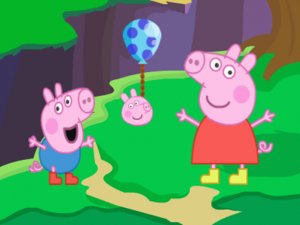
In Peppa Pig Puzzle Adventure, the central task is straightforward: move Peppa Pig from her starting position to a special egg. What makes each level distinct is the arrangement of physical obstacles and interactive objects. Players click or tap these elements to shift them, remove them, or combine their effects. Success depends on understanding how each object behaves and planning a sequence of actions that clears a safe route. Because the game relies on physics rather than fixed solutions, there is often more than one way to reach the egg.
Controls and Interaction
The game uses mouse or touch input, making it accessible on both desktop and mobile devices. Players interact by clicking or tapping on objects in the scene. There are no complex button combinations or time-limited actions. This simple control scheme keeps the focus on observation and decision-making. Each level begins with a static scene, and it is up to the player to determine which objects can be manipulated and in what order.
Designed for Young Players
Peppa Pig Puzzle Adventure is built with younger audiences in mind. The visuals are colorful and feature the familiar Peppa Pig characters. The puzzles avoid violence, timers, and failure states that punish mistakes. A hint system provides nudges when a player gets stuck, ensuring that progress remains possible without frustration. The difficulty curve is gentle, introducing new object types and interactions gradually so that children can build problem-solving skills at their own pace.
Encouraging Logical Thinking
Each level encourages spatial reasoning and cause-and-effect thinking. Players must consider how moving one object might affect another, and whether a path can be created without blocking Peppa's route. The game does not require reading or math skills, making it suitable for pre-readers. Parents looking for a non-violent, educational puzzle game will find that this title aligns with those values while still offering enough variety to hold a child's attention.








Editorial Notes