Sum Logic Grid Puzzle
Reviews
Sum Logic Grid Puzzle stands out by using sum clues instead of region constraints, making it a distinct arithmetic challenge. The progression from small to large grids accommodates both beginners and experienced solvers. Its clean interface and optional hints support learning without frustration. However, the game lacks specified multiplayer or timed modes, so it appeals mainly to solo players seeking mental exercise. Overall, it's a solid choice for those who enjoy deduction and number placement.
Description
Placing Digits by Sum Clues
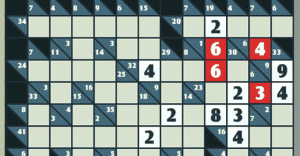
Sum Logic Grid Puzzle drops you into a rectangular grid where some cells display a target sum. Your job is to fill every empty cell with a digit from 1 to 9 so that each contiguous block of cells adds up to its clue. Unlike Sudoku, which relies on region-based constraints, this game uses only sum clues, so every deduction starts from arithmetic. Digits cannot repeat within a block, which narrows possibilities quickly once you identify block shapes.
Deduction in Action
Start with single-cell blocks, where only one digit can satisfy the clue. From there, elimination takes over. A two-cell block with a clue of 4 can only be 1 and 3 or 2 and 2, but because repeats are forbidden, only 1 and 3 works. Cross-referencing intersecting rows and columns lets you gradually fill the grid. If you get stuck, the game may offer hints to help you learn new strategies without frustration.
Grid Sizes and Difficulty
Puzzles come in various grid sizes and difficulty levels. Small, simple grids let beginners build confidence, while larger, more complex configurations challenge experienced solvers. This gradual increase keeps the experience rewarding whether you have a short break or want an extended mental workout.
Interface and Feedback
The interface is clean and intuitive, with clear visual separation between clue cells and empty cells. Numbers are easy to read, and the grid adjusts smoothly to different screen sizes. Immediate feedback shows whether a filled cell is correct or incorrect, helping you learn from mistakes. No distracting animations or sounds interrupt focus, making it suitable for quiet environments.
Cognitive Benefits
Regular play can improve mental arithmetic, logical reasoning, and pattern recognition. The game requires holding multiple possibilities in mind and systematically eliminating incorrect options. Parents and educators may find it a useful tool for reinforcing addition and subtraction skills in a low-pressure context.





Editorial Notes