Number Grid Logic: Sum Puzzle
Reviews
Number Grid Logic: Sum Puzzle earns its place among casual brain trainers by keeping rules minimal and constraints dense. The single-solution guarantee means every grid is solvable through elimination, which rewards patience over speed. Its main limitation is scope: the game offers no timers, story, or multiplayer, so players seeking action or variety in mechanics will find it narrow. For anyone who enjoys arithmetic and systematic thinking, the gradual increase in grid size and region count provides a steady difficulty curve without changing the core loop.
Description
How the Grid Constraints Work
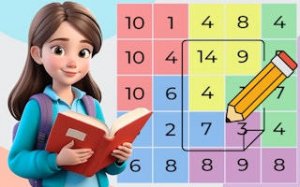
Each puzzle hands you a grid of numbers. Rows, columns, and colored regions each carry a target sum. Your job is to select a subset of numbers so every one of those targets is met exactly. The constraints overlap: a number belongs to a row, a column, and a region simultaneously, so choosing it affects three totals at once. That overlap is the puzzle's engine. You cannot solve a row in isolation without checking what it does to the column and region it touches. Since each puzzle has only one valid solution, trial and error quickly collapses—systematic elimination is the reliable path.
Difficulty Through Grid Size and Region Count
Grids start compact at 3x3, where a handful of cells and a few targets are enough to teach the rules. Larger layouts arrive as you progress, and new difficulty tiers add more colored regions and tighter constraints. More regions mean more overlapping targets per cell, which multiplies the interactions you must track. The ramp is deliberate: small puzzles build the habit of cross-checking, and bigger ones reward it. Because the rules never change, added complexity comes from structure rather than new mechanics.
Solving by Deduction, Not Speed
There are no timers and no penalty for pausing. The intended method is to scan for the row, column, or region with the fewest possible number combinations, resolve it, then use that result to narrow the next area. Elimination does most of the work. This suits players who prefer analysis to reaction, and it makes the game usable in short sessions or as a classroom addition exercise. Regular play exercises mental arithmetic and pattern recognition without time pressure.
Interface and Audience
The interface stays out of the way: numbers on a neutral background, clearly distinguishable colored regions, and target sums always visible. No animations or sound effects compete for attention. That minimalism keeps the focus on the grid and makes the game approachable for children practicing addition as well as adults wanting a quiet mental task. No prior puzzle experience is required, since the rules are explained by the puzzle itself.






Editorial Notes