Park Car Puzzle Challenge

Reviews
Park Car Puzzle Challenge stands out for what it removes: timers, scores, and pressure. What remains is a sequence of spatial puzzles where the car is the tool and the parking spot is the goal. The gradual difficulty curve and clean presentation suit casual players and puzzle fans who prefer thinking over reacting. Its main limitation is that players seeking fast-paced driving action will find little here.
Description
Planning Over Speed
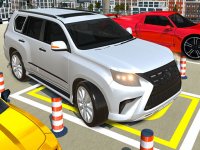
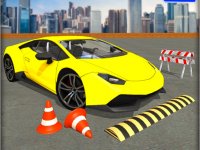
Park Car Puzzle Challenge asks players to move a car into a designated parking space without colliding with walls or other parked vehicles. Unlike racing titles that reward fast reactions, this game rewards looking ahead. Before touching the controls, it helps to trace the intended path mentally and identify which obstacles will force a turn or a reverse. The challenge comes from judging angles and distances, not from beating a clock.
Controls and Maneuvering
Keyboard inputs handle forward movement, reversing, and steering. The controls are built to feel responsive, which matters because small corrections often decide whether a car fits into a tight spot. A typical attempt involves short forward bursts, gentle steering adjustments, and occasional reversing to reset an angle. If a route turns out to be wrong, the level can be restarted and approached differently.
Level Structure and Difficulty
Each level presents a new arrangement of walls and cars, so the solution from one layout rarely transfers directly to the next. Difficulty rises gradually, giving players time to build familiarity with how the car responds before the gaps get narrower and the obstacle patterns more complex. Because there are no time limits or scores, the pacing stays entirely in the player's hands.
Who It Suits
The clean visual design and simple interface keep attention on the puzzle itself. There is no violence or inappropriate content, making it suitable for families and casual players. Puzzle enthusiasts who enjoy spatial reasoning will find the most value, especially if they prefer thoughtful problem-solving over reflex-driven action.







Editorial Notes