Monochrome Leap Arcade
Reviews
Monochrome Leap Arcade succeeds by removing everything that is not the core challenge. The monochrome palette keeps obstacles readable, the double-jump adds a layer of decision-making, and the one-mistake rule makes each run feel consequential. There are no unlockables or power-ups, so the appeal depends entirely on whether you enjoy chasing a personal high score. Players who want steady progression or story content will find little here, but those who like pure reflex tests will get a focused browser game.
Description
Jump Timing as the Only Skill
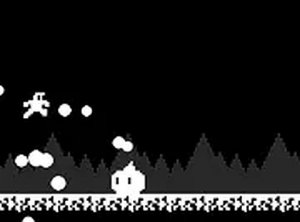
Monochrome Leap Arcade asks one thing of the player: press jump at the correct moment. Platforms and hazards scroll past, and each successful landing adds to your score. A single mistimed jump ends the run immediately. There is no health bar, no checkpoint, and no way to recover from a bad input. That structure turns every attempt into a short, focused test of reaction speed and pattern reading.
Why the Monochrome Look Matters
The game uses a black-and-white palette that removes color as a distraction. Platforms and obstacles stand out through shape and contrast alone, so your eye can track the next landing spot without sorting through visual noise. It is a functional choice, not just a stylistic one. The retro arcade feel comes from that same restraint, and the result is a screen that stays readable even when the action speeds up.
Controls and the Double-Jump
You play with either a keyboard or a mouse, and the primary input is a single jump command. A double-jump adds a second decision: whether to use the extra height now or save it for a later gap. That small choice separates a lucky run from a controlled one. Full-screen mode is available, and the game runs in a desktop browser without installation or lag. Responsiveness matters here because the entire challenge depends on inputs registering exactly when you press them.
High Scores Instead of Unlockables
There are no levels to unlock and no power-ups to collect. Progression is measured only by your personal high score. Improvement comes from practice and from learning to anticipate obstacle sequences, not from earning upgrades. Each run starts fresh, so the game pushes you toward self-improvement rather than external rewards. That design keeps the focus on beating your own record and on the satisfaction of a clean run.









Editorial Notes