Obstacle Strike 3D
Reviews
Obstacle Strike 3D succeeds by slowing the arcade formula down. Instead of rewarding fast reflexes, it asks players to study moving barriers, find a safe path, and strike only when the pattern allows. The clean 3D visuals and immediate feedback make each decision readable, while the gradual difficulty curve keeps matches from feeling repetitive. Its lack of a story mode or lengthy campaign is a limitation for players who want narrative structure, but the short, repeatable rounds and family-friendly presentation make it a strong fit for casual sessions and shared play.
Description
Reading the Barrier Patterns
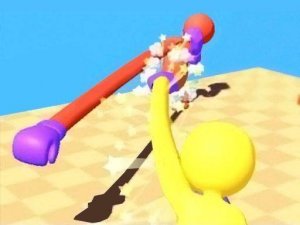
Each match in Obstacle Strike 3D places a character on a stage while a matchmaker introduces moving barriers that slide, rotate, or shift across the play area. The player must navigate through these obstacles without contact, finding a clear path to the opponent. The barriers are not random; they follow logical sequences that can be learned and anticipated. This turns every pattern into a small puzzle that must be solved before engagement is possible. Rushing often leads to a missed opportunity or a collision that resets progress, so careful observation matters more than quick reflexes.
Dodge, Position, Strike
Once an opening appears, a well-timed tap delivers a strike. Success depends on reading the pattern of barriers and committing to the moment of attack. This loop of dodge, position, and strike creates a rhythm that feels both tense and rewarding. Unlike many arcade games that emphasize speed, Obstacle Strike 3D rewards patience and planning. The game subtly teaches that watching, waiting, and moving with purpose is more valuable than constant motion. This makes it accessible to younger players while still offering depth for adults.
Clear Visuals and Immediate Feedback
The game presents a clean, colorful 3D environment that is easy to read at a glance. Characters and obstacles are clearly defined against a neutral background, reducing visual clutter. Each action produces immediate feedback: a successful dodge is accompanied by a subtle visual cue, and a well-timed strike triggers a satisfying animation. This feedback loop helps players understand the consequences of their choices. The art style is cheerful and non-threatening, ensuring the game remains appropriate for all family members. There are no intense or frightening elements, making it suitable for shared play.
Short Matches, Lasting Challenge
Obstacle Strike 3D is structured around short, repeatable matches. Each round offers a unique combination of barrier types and positions, ensuring that no two attempts feel exactly the same. A scoring system tracks accuracy and consistency, giving players a reason to revisit earlier matches. There is no complex story or lengthy campaign; the focus is on improving one's own performance. This pick-up-and-play design makes it ideal for brief breaks or longer sessions. The challenge scales gradually, introducing more complex obstacle patterns as the player demonstrates mastery.








Editorial Notes