Lost Planet Return Puzzle Runner
Reviews
Lost Planet Return Puzzle Runner trades combat for environmental problem-solving, asking players to read terrain, time jumps, and manipulate objects like crates and levers. Its momentum-based movement gives every action weight, so rushing rarely works. The muted art and sparse audio reinforce isolation, while generous checkpoints keep failure low-stakes. It suits players who enjoy thoughtful side-scrolling puzzles and atmospheric storytelling. Those seeking action or fast-paced challenge may find the pace too restrained.
Description
An Unsettling Awakening
Lost Planet Return Puzzle Runner opens with the player character regaining consciousness aboard a damaged spacecraft, unable to recall how they got there. Through the viewport, Earth rotates below, but the continents look wrong — familiar in shape yet hollowed out and alien. That single image drives the whole experience: the pull to get back to people who may or may not still be waiting. The story is told through the environment itself, with quiet stretches that let players assemble the truth at their own pace rather than through cutscenes or dialogue dumps.
Movement With Weight
Control is deliberately simple. The character can move left or right, jump, and slide. What matters is that every action carries momentum. A jump's arc shifts depending on how fast the character is running, so a standing hop and a sprinting leap land in completely different places. Sliding lets you duck under low barriers or preserve speed on downward slopes. Rushing usually backfires; the game rewards stopping to read a room before committing to a move.
Puzzles Built Into the World
Each area blends physical puzzles with platforming. Some obstacles require timing a jump to a moving platform's arrival. Others ask you to spot patterns in rotating beams or floors that collapse on contact. Crates and levers appear as tools you manipulate to carve out a safe route. There is no combat at all — the only antagonist is terrain that punishes impatience. Because hazards are woven into the scenery rather than staged in separate puzzle rooms, solutions often come from understanding how a space is put together.
Gradual Skill Building
New mechanics arrive slowly. Early sections stick to basic jumps and slides. Later stages stack them: slide under a barrier, then immediately jump onto a moving platform, then read the next hazard mid-air. The difficulty curve stays gentle but never flat, and checkpoints are placed generously enough that a failed attempt costs seconds rather than progress. That structure turns mistakes into information instead of punishment.
Loneliness as a Design Choice
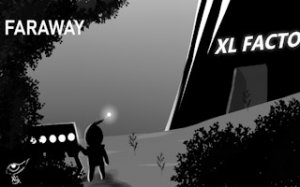
Muted colors dominate the palette, broken up by glowing plants or distant stars. Backgrounds shift from industrial ruins to overgrown forests, hinting at time passing without ever stating it. The soundtrack stays sparse — wind, mechanical hums, ambient noise — which keeps attention on the player's isolation and the puzzle ahead. It is a quiet game by intention, and that restraint is what makes its few bright moments land.






Editorial Notes