Festive Tic Tac Toe Holiday Puzzle
Reviews
Festive Tic Tac Toe Holiday Puzzle keeps the classic three-by-three rules intact and wraps them in winter icons, falling snow, and cheerful music. The result suits players who want a short, low-pressure match during the holiday season. Single-player and local two-player modes cover both solo breaks and shared screen time. The main limitation is that the core strategy is unchanged from standard tic tac toe, so anyone seeking deeper mechanics may find it light. Its strength is accessibility and a calm, festive presentation.
Description
Seasonal Symbols and Grid Play
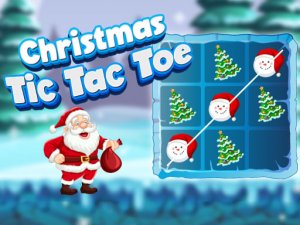
Festive Tic Tac Toe Holiday Puzzle replaces the usual X and O marks with winter icons such as snowmen and decorated trees. The three-by-three board sits against a backdrop of festive colors and gentle falling snow, giving each match a calm, seasonal look. The rules stay familiar: place your symbol on an empty square, then try to line up three of your own symbols in a row. That line can run horizontally, vertically, or diagonally. If every square fills without a line, the round ends in a draw.
Opponents and Match Flow
Two ways to play are available. In single-player, the computer takes the opposite side and moves automatically after each of your turns. In two-player mode, you and a friend alternate taps on the same device. The game tracks how many rounds each side has won, so a series of quick matches can turn into a friendly rivalry. Starting a new round takes a single action, and the interface responds to every tap or click with clear visual feedback. No downloads or accounts are required, so a match can begin as soon as the page loads.
Presentation and Atmosphere
Falling snow drifts across the screen while cheerful background music and sound effects play. These touches reinforce the holiday theme without obscuring the grid or distracting from the next move. The layout works on both desktop and mobile browsers, and each round is short enough to fit into a brief break. The visuals lean on recognizable winter imagery rather than complex animation, which keeps the focus on the board itself.
Reading the Board
Because the grid is small, most decisions come down to spotting threats early. Blocking an opponent's two-in-a-row before it becomes three is the basic defensive habit. On offense, building a position that creates two possible winning lines at once forces the opponent to block only one, leaving the other open. Recognizing these patterns through repeated rounds is the main way to improve, whether the opponent is the computer or another player.








Editorial Notes