Pixel Highway Racing Arcade

Reviews
Pixel Highway Racing Arcade targets players who want quick, skill-based racing sessions without complex simulation mechanics. The pixel art style and minimal controls make it approachable, while time trials, endless runs, and missions offer enough variety to justify repeated plays. Bike upgrades tied to coin collection add a light progression hook. The main limitation is that the input does not describe multiplayer or extensive track variety, so players seeking deep competitive features may find it lean.
Description
Racing Through Pixel Landscapes
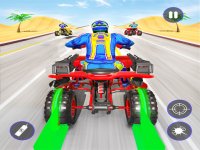
Pixel Highway Racing Arcade places players on a motorcycle in a side-scrolling pixel art world. The environments shift between city streets, deserts, and forests, each with its own visual rhythm. The core loop is simple: accelerate, steer left or right, and stay alive as long as possible. Obstacles include oncoming traffic and ramps that can be used to jump over hazards. Coins scattered along the road serve as both score multipliers and currency for unlocking new bikes.
Modes That Test Different Skills
The game offers three distinct modes. Time trial challenges players to complete laps before the clock runs out, rewarding track memorization and efficient routing. Endless mode removes the timer and asks how far one can travel without crashing, prioritizing survival over raw speed. Mission-based challenges add objectives that vary the pace and force players to adapt their approach. Each mode feeds into the same coin economy, so progress in one carries over to the others.
Bike Upgrades and Stat Trade-offs
Coins earned during races unlock new motorcycles, each with unique stats for speed, handling, or acceleration. A faster bike may be harder to control in tight traffic, while a nimble one might lack top-end speed for long straights. This creates a light strategic layer: players choose a bike that matches their preferred mode and driving style. Customization options let players personalize their ride without affecting performance, keeping the focus on skill rather than pay-to-win mechanics.
Controls and Accessibility
Steering works with arrow keys or on-screen controls, making the game playable on both desktop and mobile devices. The control scheme is intentionally minimal—left, right, accelerate, and jump—so new players can start racing within seconds. That simplicity hides a demanding reflex test at higher speeds, where traffic patterns and obstacle placement require quick decisions. Leaderboards track high scores globally, giving competitive players a reason to replay beyond simple coin farming.








Editorial Notes