Color Snake 3D Arcade Run
Reviews
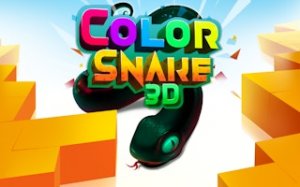
Color Snake 3D Arcade Run takes the snake formula and adds one rule that changes everything: your color must match the gate you pass through. That single constraint turns steering into planning, because a wrong color ends the run instantly. Items that alter color or length give you tools to manage the track, and rising speed keeps the pressure on. The simple touch or tilt controls suit short sessions, while the endless structure rewards players who want to chase a personal best. It is a reflex game first, but the color layer adds a thinking step that separates it from a standard runner.
Description
Matching Color to Gates
Every gate on the track has a color, and your snake has a color of its own. Passing through a gate is only safe when the two colors match. If they don't, the run ends. That single rule turns a familiar snake format into a decision game: you are constantly reading the next gate and checking it against your current color. Because the snake keeps moving, the check has to happen early enough to react. The mechanic rewards players who look several gates ahead rather than only at what is directly in front of them.
Items That Change the Run
Collected items do two different jobs. Some change the snake's color, which is how you prepare for a gate that would otherwise be a mismatch. Others increase the snake's length. Both effects matter because they interact with the course: a color change can rescue an otherwise impossible sequence, while added length changes how the snake occupies the track. Choosing when to take an item, and which one, becomes part of the planning rather than a reflex grab.
Rising Speed and Complexity
The game starts at a manageable pace and then pushes forward. Speed increases as the run continues, and obstacle patterns grow more complex. Early on, a single color check is enough. Later, gates and items arrive in tighter sequences, so the gap between seeing a problem and solving it shrinks. That progression is what gives the game its arcade structure: each run is a test of how long you can keep reading the track correctly before the pace outruns your decisions.
Controls and Session Length
Steering uses simple touch or tilt input. There is no complex control scheme to learn, which keeps attention on the color-matching decision instead of on the interface. The endless format means a run can last a short break or a longer session, and the difficulty curve is carried by speed rather than by new buttons. Players who enjoy reflex-based challenges and quick pattern recognition will find the loop easy to start and hard to put down once a personal best is in reach.







Editorial Notes