City Defender Robot Chase
Reviews
City Defender Robot Chase targets players who want fast, accessible action without a steep learning curve. Its strengths are the simple jump-and-collect loop, the shop that turns coins into meaningful power-ups, and an endless structure that supports both short and long sessions. The main limitation is that the input does not describe any story, multiplayer, or level variety beyond the endless format, so the appeal rests on reflexes and score chasing rather than narrative depth.
Description
Rooftop Evasion and Robot Encounters
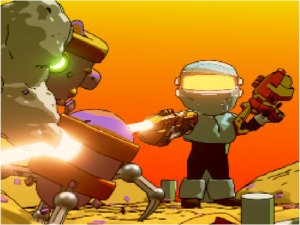
City Defender Robot Chase places you on a skyline of interconnected rooftops. Your task is to keep moving, timing each jump so you land safely while evading or overcoming the robot invaders that threaten the city. The game uses simple keyboard or touch controls, but the spacing between buildings and the placement of obstacles demand steady reflexes. [IMG_1]
Coins, Power-Ups, and the Upgrade Shop
Coins and bonuses appear across the rooftops. Collecting them feeds directly into the shop, where you can buy power-ups such as stronger tools, shields, or speed boosts. These purchases change how you handle later sections, because a shield can absorb a mistake that would otherwise end a run, while a speed boost lets you clear wider gaps. The shop gives each session a sense of forward progress even when your score does not improve. [IMG_2]
Endless Format and Rising Difficulty
There is no final level. Instead, the game keeps generating new arrangements of rooftops, robots, and obstacles, and the difficulty climbs as you go. That structure suits short breaks as well as longer sessions, since you can stop at any point and return later. Because the patterns shift, staying alert matters more than memorizing a fixed route. [IMG_3]
Who This Game Suits
Players who enjoy quick, reflex-driven action with a light upgrade loop will find the most here. The controls are easy to pick up, but the later difficulty rewards practice and pattern recognition. The colorful visuals and changing environment keep individual runs from feeling identical, though the core loop remains jumping, collecting, and surviving.








Editorial Notes