Number Sliding Puzzle - Logic Game
Reviews
Number Sliding Puzzle offers a clean, intuitive interface and a satisfying progression from simple 3x3 grids to complex 5x5 puzzles. The absence of time limits makes it perfect for casual play, while the increasing difficulty keeps it engaging for puzzle enthusiasts. It is an excellent brain-training tool for all ages.
Description
Game Introduction
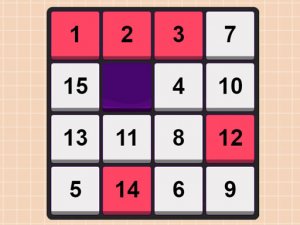
Number Sliding Puzzle is an online logic game that challenges players to arrange numbered blocks in the correct order on a grid. The core objective is to slide blocks into empty spaces until the numbers are sequenced from smallest to largest. This classic puzzle format, often called a sliding puzzle, provides a satisfying mental workout suitable for players of all ages. The game offers a clean, distraction-free environment where the focus remains purely on solving each puzzle. With its simple premise and progressively challenging layouts, it is an excellent choice for anyone looking to exercise their brain in a calm and enjoyable way. The game emphasizes logical thinking and spatial reasoning, making it a great tool for improving cognitive skills. There are no time limits or penalties for mistakes, allowing players to think through each move at their own pace. The interface is designed to be intuitive and accessible, ensuring that even first-time players can quickly understand the mechanics. As players advance, they encounter larger grids and more complex arrangements, which require greater planning and foresight. The game is perfect for short breaks or extended play sessions, offering a relaxing yet stimulating experience. Its universal appeal makes it a favorite among puzzle enthusiasts and casual gamers alike.
How to Play
To play Number Sliding Puzzle, players interact with the grid by clicking or tapping on a numbered block that is adjacent to an empty space. This action slides the block into the empty spot, creating a new empty space. The goal is to continue this process until all numbers are arranged in the correct sequence, typically from smallest to largest. The game usually starts with a small grid, such as 3x3, and gradually increases in size as players master each level. There are no time limits or penalties for making mistakes, allowing players to think through each move at their own pace. The controls are intuitive, making it easy to pick up and play on both desktop and mobile devices. Players can undo moves or restart puzzles if they wish, though this may vary by version. The simple click or tap controls make the game accessible to everyone.
Game Features
Number Sliding Puzzle includes a progression of difficulty, starting with simple grids and moving to larger, more complex ones. The interface is clean and easy to read, with clear numbering on each block. There are no time limits or move penalties, so players can play without pressure. The simple click or tap controls make it accessible on both desktop and mobile devices. The game is designed to be a relaxing yet stimulating activity, perfect for short breaks or extended play sessions. Some versions may include a move counter or timer for players who want to track their progress, but these are optional. The game may also offer different grid sizes, such as 4x4 or 5x5, to increase the challenge. The focus remains on providing a calm, brain-training experience without distractions.
Tips for Success
To improve performance in Number Sliding Puzzle, start by focusing on moving the first few numbers into their correct positions. This often involves creating a clear path for each block. Plan several moves ahead to avoid getting stuck, and try to solve the puzzle in as few moves as possible for a greater sense of achievement. If you find yourself stuck, take a break and return with a fresh perspective. Practicing regularly will help you recognize patterns and develop efficient strategies. Patience and logical thinking are your best tools for mastering this puzzle.




Comments
0 comments