Bowling Rope Puzzle: Physics Challenge
Reviews
Bowling Rope Puzzle: Physics Challenge offers a specific kind of satisfaction: the moment a well-ordered sequence of rope releases sends the ball curving into the last pin. The pendulum physics make every cut matter, and the lack of a timer encourages thinking rather than reacting. It suits players who enjoy casual puzzle games with a skill element and who do not mind replaying a level to test a new idea. The main limitation is that the input does not describe multiplayer, level creation, or mobile support, so anyone seeking those features should check before playing.
Description
What You Actually Do
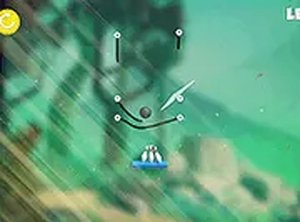
Each level presents a bowling ball suspended by several ropes above a set of pins. You click a rope to release it. The ball drops, and because it is still attached to other ropes, it swings like a pendulum under gravity. Your job is to choose which ropes to cut and when, so the ball eventually strikes every pin. Obstacles and traps can block the ball or push it off course, so observation comes before action.
Why the Order Matters
Releasing ropes in a different sequence changes how the ball swings, where it gains speed, and which pins it reaches first. A rope that seems unimportant early on may become the pivot point that carries the ball across the lane. This is not a game of reflexes; it is a game of reading the layout, predicting the arc, and committing to a plan. [IMG_1]
Difficulty and Replay
Levels increase in complexity through denser rope arrangements, more pins, and obstacles that narrow the ball's path. You can replay any level to test a different release order or improve your timing. Mistakes are cheap because a retry is instant, which encourages experimentation rather than frustration.
Presentation and Controls
The visual style is clean and colorful, with clear separation between ropes, ball, pins, and hazards. A full-screen mode removes desktop distractions. Controls are limited to mouse clicks on ropes, so there is nothing to memorize. The game runs on desktop and is designed for short sessions or longer puzzle-solving stretches.



Editorial Notes